
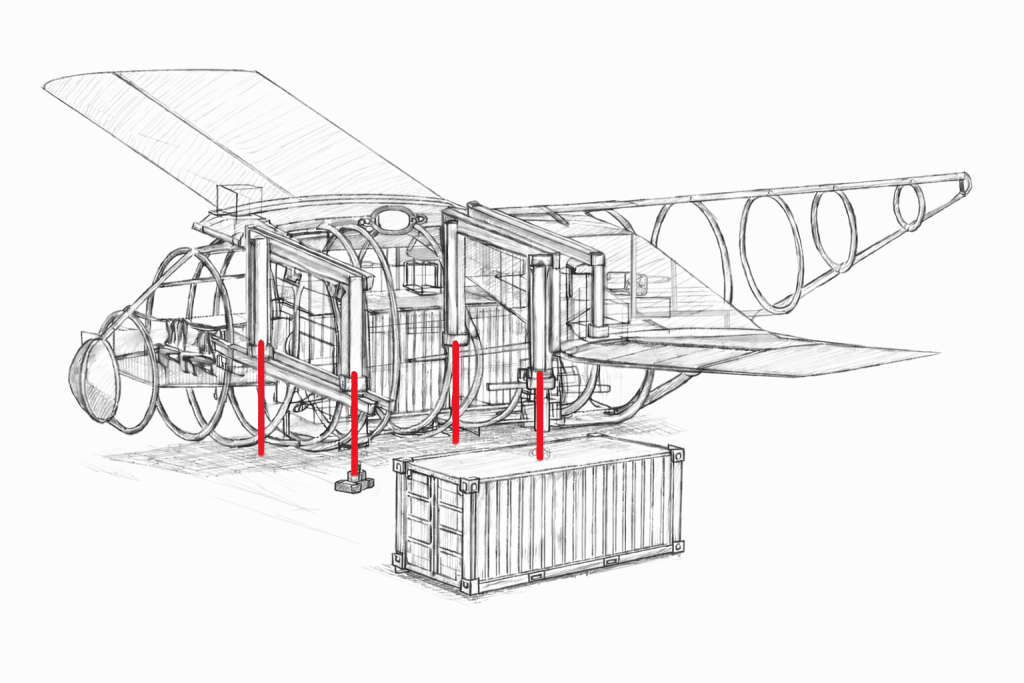
Autonomous Loading System
Loading a container without heavy ground equipment.
ISO-Plane is designed to load and unload a standard 20-foot ISO container from the ground or directly from a truck trailer.
Direct Loading
From road to air with fewer logistics constraints
The Autonomous Loading System is one of ISO-Plane’s core innovations. It allows the aircraft to handle a standard 20-foot ISO container without relying on large airport cargo infrastructure.
The objective is simple: reduce dependency on external loading equipment and make containerized air freight possible in more locations.
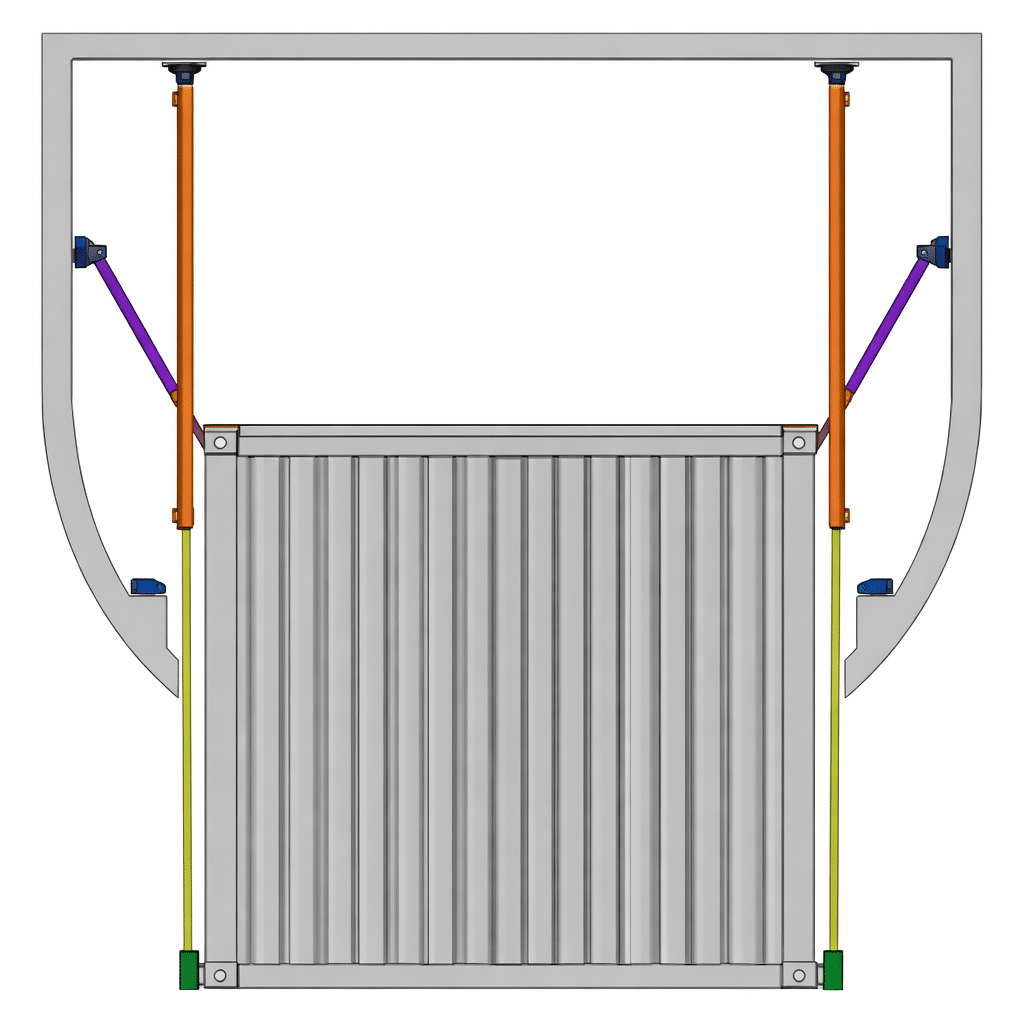
Loading Modes
Ground loading or truck-trailer loading
The container can be positioned behind the aircraft and then handled by the aircraft itself. This architecture supports flexible operations outside traditional cargo hubs.
- Loading from the ground
- Loading directly from a truck trailer
- Reduced need for external logistics equipment
System Sequence
A controlled sequence for lifting, guiding and securing the container
1. Align
The container is positioned behind the aircraft, either on the ground or on a truck trailer.
2. Lift
The loading system interfaces with the ISO corner fittings to lift and control the payload.
3. Guide
Integrated guidance rails and actuators move the container into the aircraft cargo bay.
4. Secure
The container is locked into position for flight using dedicated structural interfaces.
ISO Interface
Using the container’s standard corner fittings
The system is designed around the standardized geometry of the ISO container. By using its corner fittings, ISO-Plane avoids custom cargo interfaces and keeps compatibility with global logistics standards.
- Interface with ISO corner fittings
- Integrated lifting and guidance
- Container locking for flight loads
- Compatibility with mission-specific containers
Operational Benefit
One loading architecture for multiple missions
The same loading architecture can support cargo containers, humanitarian modules, medical units, firefighting tanks or other mission-specific payloads.
Turnaround
Designed for fast and repeatable cargo operations
The loading cycle is intended to be simple, controlled and repeatable. The goal is to reduce aircraft downtime while keeping the process compatible with field operations.
- Reduced turnaround time
- Lower dependency on airport cargo infrastructure
- Better access to remote or low-equipment airfields
- Simplified logistics between road and air transport
Road-to-Air Logistics
The aircraft is designed to make the container easy to move.
By integrating the loading system into the aircraft concept, ISO-Plane turns the standard ISO container into a practical air cargo payload.