
Key Features
Built around one container.
ISO-Plane is a purpose-built cargo aircraft concept designed to load, transport and unload one standard 20-foot ISO container with minimal ground infrastructure.
Design Logic
A cargo aircraft focused on one standard unit.
ISO-Plane is not designed as a general-purpose freighter. Its architecture is focused on one mission: moving a standard ISO container directly between road, ground operations and air transport.
1
standard 20-foot ISO container
8 t
target container mass
2
crew concept
2 × PW150A
turboprop reference engines
Core Capabilities
The features that define ISO-Plane.
ISO container first
The aircraft is designed around one standard 20-foot ISO container instead of adapting the container to a conventional cargo hold.
Autonomous loading
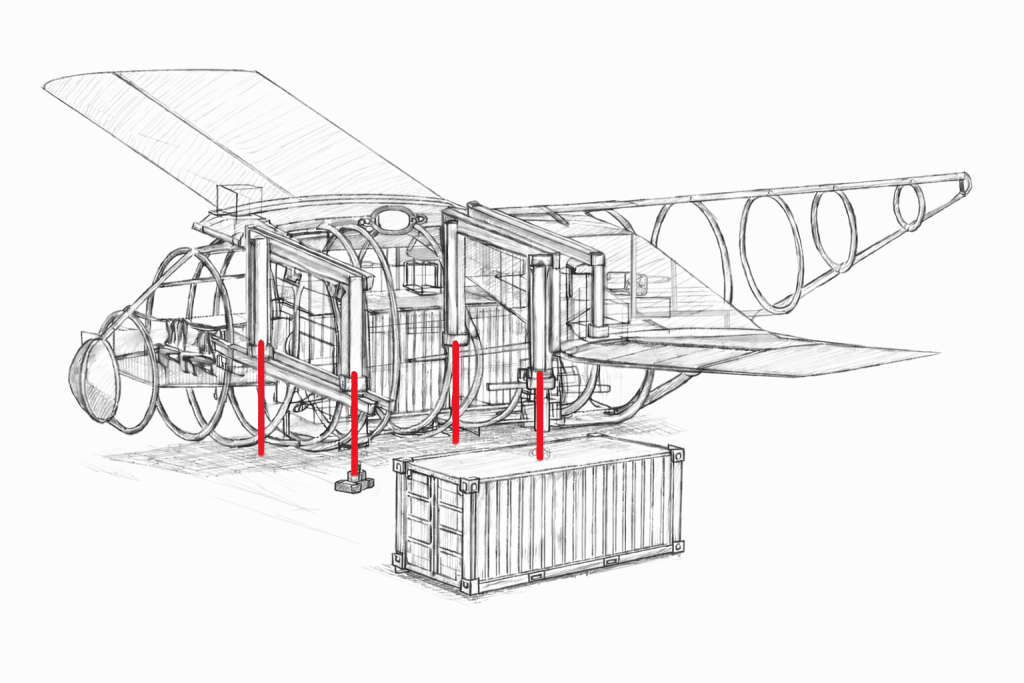
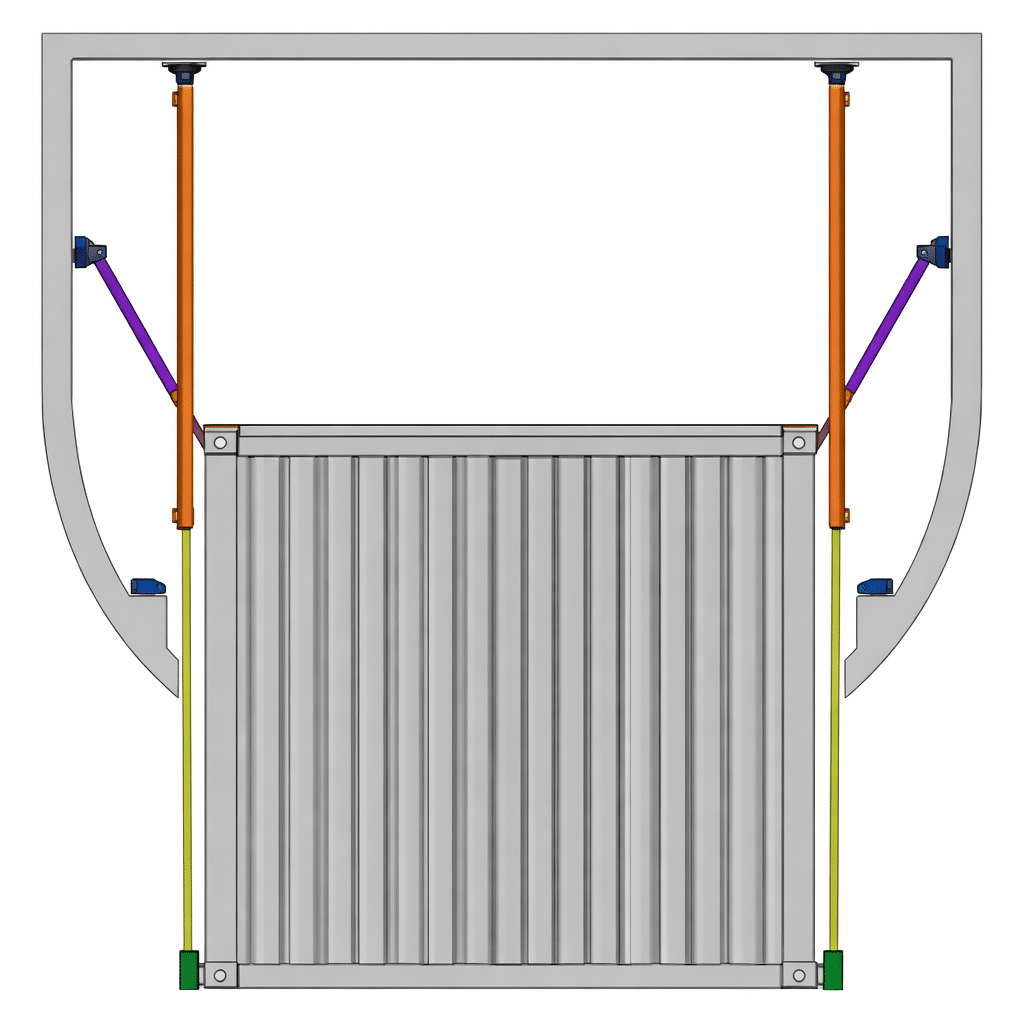
The loading concept uses integrated mechanisms to lift, guide and secure the container without relying on cranes or airport cargo loaders.
Ground and trailer access
The container can be handled from ground level or directly from a truck trailer, supporting direct road-to-air logistics.
Ventral cargo access
A three-panel ventral door concept gives the container a vertical path into the cargo hold, keeping the loading operation close to the aircraft’s centerline.
Pressurized cargo hold
The pressurized cargo bay concept supports sensitive payloads, medical modules and operations at cruise altitude.
Mission modules
The aircraft stays the same while the container defines the mission: logistics, humanitarian aid, medical response, firefighting or defense support.
Autonomous Handling
Designed to reduce dependence on ground infrastructure.
The core operational advantage is simple: the aircraft is intended to handle its own container. This reduces the need for local cargo loaders, cranes, forklifts or dedicated airport freight equipment.
- Autonomous container lifting concept
- Interface with ISO corner fittings
- Cockpit-commanded loading sequence
- Backup loading concept with electric winches
Aircraft Architecture
A focused configuration, not an oversized freighter.
ISO-Plane uses a high-wing twin-turboprop configuration with a cargo bay sized around one container and a landing gear concept derived from regional turboprop aircraft logic.
- High-wing cargo aircraft architecture
- Two PW150A-class turboprop reference engines
- Q400-derived main landing gear concept
- Pressurized cockpit and cargo compartment
Operational Value
Useful where infrastructure is limited.
ISO-Plane is most relevant when time, access and ground infrastructure are the limiting factors: remote bases, islands, disaster zones, isolated industrial sites and emergency logistics corridors.
Remote logistics
Connect isolated locations to the container logistics network without waiting for heavy ground equipment.
Humanitarian response
Deliver containerized supplies to crisis areas where local logistics infrastructure may be damaged or unavailable.
Firefighting module
Use a containerized water or retardant module without turning the aircraft into a single-purpose firefighting platform.
TRL3 Baseline
Key features under technical validation.
ISO-Plane is currently a TRL3 aircraft concept. The priority is to validate the loading system, the ventral cargo door, the pressurized cargo bay structure and the container load path before industrial development.
Loading system
Kinematics, alignment tolerance, load monitoring and autonomous lock verification are the main validation topics.
Ventral door
The lower cargo opening must be compatible with pressure loads, fatigue, sealing, locking and aircraft structure.
Mass control
Empty weight, door mass, loading system mass and structural reinforcement must be tracked before performance figures are frozen.
ISO-Plane
A specialized aircraft for containerized air logistics.
One standard container. Autonomous loading. Reduced infrastructure dependency. A focused aircraft concept for missions where direct logistics access creates value.